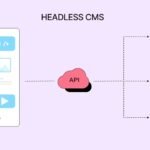

Digital ecosystems are constantly changing more quickly than ever. New devices and means of access take the world by storm, expectations change, frameworks adapt, and organizations begin to grow across channels and new markets. When content is inextricably linked to templates, themes, and a fixed means of delivery, more traditional CMS solutions fall short in an ever-evolving digital ecosystem. Headless CMS solutions overcome this obstacle with their decoupled content and delivery based on an API-first approach. Such architecture provides more freedom for enterprises, allowing them to adapt, integrate new solutions and programs, and scale without fears of extensive rebuilds and downtime. This article will explore how a headless CMS is the future, guaranteeing enterprises a future-ready solution that addresses complications bound to arise as digital ecosystems grow increasingly complex.
Separation of Content and Presentation Creates Long-Term Flexibility
One of the most revolutionary benefits of working with a headless CMS is the separation of content and presentation. Traditional platforms shove content into set templates, making redesigning, replatforming, or multichannel extension tedious and expensive. Headless CMS for enterprise flexibility addresses this challenge directly by removing rigid structural constraints and enabling long-term adaptability. Such physical rules and limitations don’t apply with headless architecture. Content exists independently as structured content; the front end is created by developers free to use any framework and technology. As new devices and channels come to the market, only the presentation layer needs updating; the content layer remains the same. Such long-term flexibility ensures that no digital ecosystem becomes trapped within an out-of-date theme or rendered useless because a CMS can’t keep up.
API-First Delivery Makes Integration with Future Tech Seamless
APIs are the universal language of modern digital systems. With a headless CMS, content is delivered through APIs, and thus, it will be compatible with any technology existing or entering the market that can properly render structured data. Whether in AR devices, car dashboards, in-store kiosks, wearables, or conversational AI, APIs allow content to flow seamlessly from one space to another. Such integration eliminates the barriers of hesitation and fosters innovation. If organizations know their content will be compatible with virtually any technology, they are more likely to experiment with new resources. There’s no need to migrate data or reinvent the wheel when new tech comes into play; simply plug-in and connect. API-first architecture places the CMS in a foundational position that safeguards it from real-time challenges.
Structured Content Allows For Unlimited Reuse Across Channel Expansion
Future-proofing relies on structured content as it removes ideas from rigid page templates and forces content into modular qualities. Titles, summaries, images, CTAs, etc., can be reused across applications and restructured in new contexts. They can easily scale into new interfaces without duplication. For instance, when teams create a new app or microsite, they don’t need to create content from scratch – they can grab all the structured fields via API that already exist and adjust them as necessary. The same goes for automation and AI-generated content workflow. If all fields exist independently from the get-go, the likelihood they will be reused in years to come increases greatly as long as they are stored efficiently.
Supports Multi-Channel Publishing without Additional Build Out
These days, digital is anything from web, mobile, social, digital signage, smart assistants, etc. Traditional CMS can no longer keep up with the demand for one front end that grows too connector. A headless CMS can have creation and maintenance in one space and disperse to any channel or necessary perspective/interaction with no rules. This focused venture provides a single source of content meaning less operational overhead to keep consistent with faster time to market. For those digital agencies that have yet to convert to headless CMS, their tech stacks may need rebuilding to adapt to any other venture; with headless architecture, it’s all set – multi-channel publishing isn’t the work, it’s the nature of the game. The expectation of scaling and dispersing content for broader digital endeavors is an anticipated advantage of a future-forward approach.
Ease of Front End Development and Technological Adaptation
Front end frameworks and technologies are always changing. React, Vue, Svelte, Next.js, Nuxt, Astro, etc all constantly flip new updates and expanses like cards in a deck. Traditional CMS can no longer keep up; developers are left using existing templating technologies or running the risk of content dispute. With a headless CMS, however, templating needs are nonexistent. Developers can update a framework over here, scrap components over there, or start from scratch without fear of what’s been rendered on the back end. It means that whatever best suits the end user or organization for current needs has little to no translation issues in rendering. Organizations can stay competitive digitally when a CMS isn’t the limiting factor to cutting edge possibilities.
Performance Limitations Satisfied through Future Ready Rendering Options
Expectations of performance only increase. Where traditional CMS helps development teams in meeting expectations, headless CMS does this through rendering expectations of Static Site Generation (SSG), Server Side Rendering (SSR), edge rendering and more cohesive/hybrid options. Traditional CMS requires development from a physical staging perspective which limits rendering abilities for teams. Since the headless CMS provides content in a created structure from blank canvas stage, rendering options are at the team discretion based on use case/channel. Where rendering options are varied, teams can pivot rendering choices or upgrade unless critical content is saved in mid-rendering construction. This means that during future transitions and increased traffic, performance is sustained without redos from previous creation.
Facilitating Scalable Content Workflows for Growing Global Teams
Future-proofing applies not just to technology but operational scalability, as well. Content becomes increasingly complicated as organizations grow their markets, languages, and product lines. A headless CMS champions global expansion by providing localization workflows, version history, editorial rights, and components that facilitate collaboration without content teams overwriting each other’s work or redundantly creating the same content. When workflows are centralized and channel-neutral, editorial operations expand easily in number and consistency. Such operational scalability is critical to survive and thrive in the long digital life.
Enhancing Security with Reduced Platform Attack Surface
Security is a moving target; CMS platforms become vulnerable from security flaws discovered post-deployment to failed plugins due to expansive plug-in offerings, outdated templates, and public-facing back ends. A headless CMS secures content management behind APIs, removing public access into a back end and, instead, relying on API security features like token-based authentication, rate limiting, and permission scoping. Organizations can regulate security implementations that reduce overall attack surface; as such, security standards that change over time are better adapted in an API-first approach. Where security vulnerabilities can be dodgy over time in the traditional CMS model, an API-first approach offers dynamic flexibility for security measures that truly protect.
Reducing Technical Debt with Modular Architecture
Technical debt is easy to accrue in a monolithic CMS platform. Tightly-coupled templates and theme dependencies require specific developer input; plug-in conflicts and increasingly complex granular workflows mean that over time it’s almost impossible to expand on the existing framework. A headless CMS reduces technical debt with a modular architecture; content models, APIs and front-end rendering layers allow each piece of the project to evolve separately. Teams can upgrade frameworks, refactor code, replace rendering strategies without breaking content structures; this reduces the likelihood of a digital ecosystem evolving into a legacy system, slowly decaying and needing to be rebuilt in time. Instead, organizations can evolve their stack over time with greater ease in small increments rather than massive undertakings every couple of years.
Keeping Organizations Ahead of Future Trends and Technologies
The digital ecosystem will expand into AI-generated content, hyper-personersonalization, immersive interfaces, context aware systems; a headless CMS already supports this with structured content, access via APIs, accessibility integration. Organizations can simply add AI for automation, personalization, localization or to feed generated content suggestions without restructuring. At the same time, headless systems support open standards and application integration meaning whatever the future holds in the next ten years does not require a re-architecture but mere additions. If the digital ecosystem is to be adaptable, resilient and competitively advantageous, a headless CMS is a must.
How Headless CMS Is The Most Future-Proof Digital Architecture
Future-proofing occurs with flexibility, adaptability, scalability and resilience. Other CMS options miss one or more of these elements at scale. Headless CMS achieves all of them, promoting constant evolution for organizations without unnecessary migrations or downtime. By decoupling content from experience, leveraging APIs, employing structured content models, supporting multi-channel ecosystems and encouraging developer freedom, headless CMS ultimately creates an innovative engine for digital endeavors. As digital demands continue to proliferate, the organizations operating under a headless architecture will stay ahead of technology developments and consumer demands. When change is at the forefront, no other architecture is more sustainable than a headless CMS.
How To Maintain Content Reusability Over Time To Future-Proof A Digital Ecosystem
The best way to ensure a digital ecosystem is future-proofed is by content being reusable, repurposable and adaptable over time. Semantic content modeling – content based on semantics rather than layout – allows for information to be interchangeable over time as channels transform. This means determining what fields are “product”, “article”, “testimonial”, etc. – not based on how they look on a page – but how each rigid title can be endlessly reused across different systems/formats. This prevents lock-in, facilitates easier migrations and generates value to content equity over extended periods. Semantic value gives content the structuring it needs to be usable in the future even if technology and user expectations are drastically transformed.
Expansion into New Markets and User Bases Without Migration
Where market change or new user bases necessitate content ecosystems to shift, a headless CMS prevents the need for the rebuilding or new CMS/platform investments that small pivots would need. A headless CMS supports a centralization of content but applies infinite variations through localization fields, segmentation metadata, and conditional API delivery. Therefore, organizations can create new languages for new marketplaces, new regional requirements and personalization options without new instances (or nesting levels that would require complicatedly, restructured backend logic). They can add in NEW options for regions in marketplaces they never anticipated, test out things that they never would have before based on generalize understanding and non-headless functioning philosophies, and place end-user access as priority with minimal operational dedication and no CMS migration downtime. Even if an organization finds it rarely expanding in new opportunities and bandwidth, it can still easily provide the information across multiple avenues.
Always Testing and Evolving Frontend Access
Staff often exists best in digital spaces where they can constantly test things – layouts, messages, personalized approaches, rendering techniques, paths taken. They can do this without the risk of a headless CMS dismantling what’s already been put in place through the content ecosystem because what’s established is separated from how it’s being rendered at the time. This means developers can A/B test, see how a framework looks, even redesign an entire subpage without concern for the content and have to shift it into different avenues to find the best placement. It doesn’t move. It doesn’t need anything to happen to it because the people creating from the front-end have access to it at all times. There’s no waiting period for other team members to get access because content is moved around guessing what might be best case scenario. It’s there. People make it happen quickly. This is important because if organizations want to keep up with live trends, it makes sense to do it because it’s timely – real-time access allows for immediate implementation. If teams had to go back to their CMS tools each time to shift something from one place to another just to give proper access to the content creators second-guessing for how long it’s going to take, they’ll never stay relevant.
Avoiding Migration for Modular Growth
Especially for larger organizations, migration is costly and risky; migration is something to avoid at all costs – and with a headless CMS, it will be avoided. A headless CMS allows team members and creators to modularize modernization of content/intended front ends. For instance, if an organization wants to modernize XYZ types of content but the older version still works and is useful, they can switch stuff out one type by type. If a legacy front-end needs to be switched out but it’s too costly – and too risky – to do so with everything updated all at once over one time, they’ve avoided that ticket by being allowed gradual transition. They can recategorize conditional APIs without concern for what’s already established in a way that could fracture what’s there instead incremental improvements are made without downtime and financial considerations greatly reduce risk assessment. One step at a time provides modular growth instead of moves that are risky when inclusive efforts are all-or-nothing but not for one piece at a time. When change seems daunting like a migration effort or something that’s one and done, a headless CMS supports growth as part of an effort for incremental improvement where what’s already been established is not worthless but instead supported for long-term sustainable plans.