
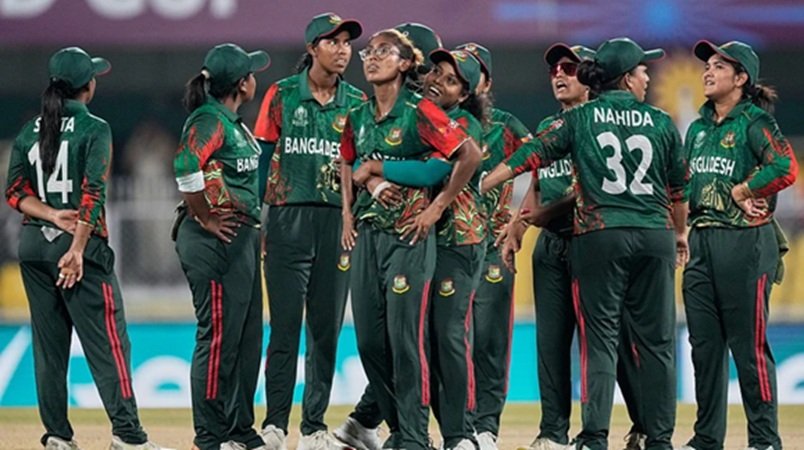

In Bangladesh, the story of women in sport used to be told quietly, almost in the margins. Today, the tone has changed. Prize money is higher, crowds are louder, and the journeys of young women in football, cricket, and other disciplines have become a mirror in which an entire country is beginning to see itself in a different light. The revolution is not complete, but it has unmistakably begun.
From Kathmandu to the Asian stage
The turning point for many came in 2022, when the women’s national football team lifted the SAFF Women’s Championship trophy in Kathmandu, beating Nepal 3–1 in the final and claiming Bangladesh’s first regional title in the competition. That night, the celebrations in Dhaka and small towns across the country carried a new kind of pride, one that belonged to daughters as much as to sons. Two years later, the team added a second straight SAFF crown and, under British coach Peter Butler, qualified for the AFC Women’s Asian Cup for the first time, jumping 24 places up the FIFA rankings after a dominant qualifying campaign. For captain Afeida Khandaker and her teammates, these were not just wins on the pitch, but messages sent to every girl playing barefoot on a village field.
Recognition followed. The prime minister promised prize money and even houses for players who needed them, while the Bangladesh Army announced a separate cash reward of 10 million taka for the SAFF champions. At club level, the Bangladesh Women’s Football League resumed with renewed energy: Bashundhara Kings built a mini dynasty with three straight titles, and Nasrin Sporting Club emerged as 2023–24 champions, as forward Sabina Khatun became the league’s all-time top scorer. For the first time, young fans could follow a structured women’s league, with televised matches and highlight clips circulating widely on social media.
Cricket’s quiet but meaningful pay rise
While football captured headlines, women’s cricket moved steadily forward in its own way. The Bangladesh Cricket Board expanded its list of centrally contracted women, introduced a National Contract scheme to cover 30 additional players, and raised monthly retainers across all grades, while adding match and series-winning bonuses for victories against higher-ranked opposition. On the global stage, the International Cricket Council announced a record prize pool for the 2025 Women’s World Cup: the winner’s purse now exceeds the men’s 2023 World Cup, and Bangladesh earned around 280,000 dollars after finishing seventh in the group phase.
Phones, platforms, and a new kind of fan
As opportunities on the pitch expand, the way supporters engage with women’s sport is also changing. Fans can watch live streams, follow player interviews, and track statistics from their phones. University students and young professionals compare the growth of women’s football and cricket, debate coaching decisions and track rankings with the same intensity they bring to men’s matches. Social feeds fill with SAFF celebrations, World Cup clips, and behind-the-scenes videos from training camps.
Many of these followers also experiment with interactive ways of engaging through licensed digital platforms. On regulated sites, users can explore markets that cover local and international fixtures through bet app bangladesh, combining live scores, odds, and match data in a single interface. For a growing group of fans, this is an extension of their curiosity rather than a distraction: a chance to turn instinct and analysis into small, responsible wagers that add a layer of suspense to the viewing experience.
Fewer barriers, but work still to do
None of this means that the old obstacles have vanished. Social stigma and safety concerns are the main barriers to women’s participation in sport in Bangladesh. Yet every new scholarship, every international qualification, and every awards ceremony that treats women and men with closer parity chips away at those fears. The story, however, is a little more diverse than a decade ago. It lives in the joy of teenagers lifting a trophy in Kathmandu, in the quiet satisfaction of a cricketer signing her first central contract, and in the way a girl on a school ground now points to the television and says, with calm certainty, that she can be there too.