
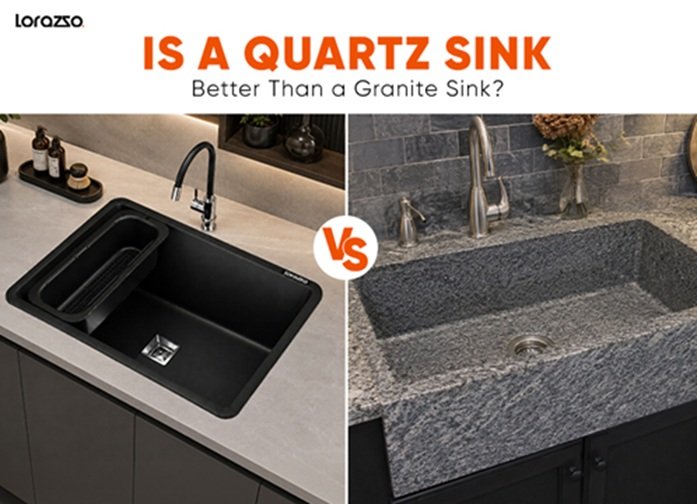

For most Indian homes, a quartz sink is better than a granite sink. Quartz sinks offer superior stain resistance, easier maintenance, and better value (₹4,000–₹25,000) compared to granite composite sinks (₹15,000–₹40,000+). Granite sinks have a slight edge in heat resistance and
natural stone aesthetics. For modern modular kitchens with heavy daily use, quartz is the more practical choice.
When designing or upgrading a kitchen, quartz sinks and their link choosing the right sink is just as important as selecting countertops, cabinets, or appliances. A kitchen sink is one of the most frequently used fixtures in any home, making durability, maintenance, aesthetics, and functionality essential considerations.
Among premium kitchen sink materials, quartz sinks and granite sinks are two of the most popular options. Both offer excellent durability, modern appeal, and long-lasting performance. However, many homeowners often ask:
Is a quartz sink better than a granite sink?
The answer depends on your priorities, budget, kitchen style, and maintenance preferences. In this comprehensive guide, we’ll compare quartz sinks vs granite sinks, explore their pros and cons, and help you determine which option is best for your home.
What Is a Quartz Sink?
A quartz kitchen sink is manufactured using a blend of natural quartz crystals and high performance acrylic resins. Typically, these sinks contain around 70–80% quartz and 20–30% resin.
Indian D2C brands like Lorazzo offer quartz kitchen sinks starting from ₹4,838, designed specifically for Indian modular kitchens, with a 10-year warranty.
This engineered composition creates a highly durable, non-porous surface that resists stains, scratches, and daily wear.
Key Features of Quartz Sinks
∙ Non-porous surface
∙ Highly stain-resistant
∙ Modern appearance
∙ Available in multiple colors
∙ Heat and scratch resistant
∙ Easy to clean and maintain
Because of these advantages, quartz kitchen sinks have become increasingly popular in contemporary and modular kitchens.
What Is a Granite Sink?
A granite sink is usually made from crushed natural granite stone combined with acrylic resins. While often marketed as granite sinks, most modern versions are actually granite composite sinks rather than solid natural granite.
Granite composite sinks are known for their premium appearance and exceptional strength. Key Features of Granite Sinks
∙ Natural stone look
∙ Excellent durability
∙ Heat-resistant surface
∙ Rich color options
∙ Scratch resistance
∙ Premium aesthetic appeal
Many homeowners choose granite sinks because they closely resemble natural stone while offering enhanced durability.
Quartz Sink vs Granite Sink: Quick Comparison
Feature Quartz Sink Granite Sink
Appearance Modern and sleek Natural stone look
Durability Excellent Excellent
Scratch Resistance Very High Very High
Stain Resistance Excellent Good to Excellent
Heat Resistance High Very High
Weight Moderate Heavy
Maintenance Easy Moderate
Color Consistency Uniform Natural variation
Cost Moderate to Premium Premium
Installation Easier More demanding
Durability: Which Sink Lasts Longer?
Durability is often the first concern when investing in a premium kitchen sink. Quartz Sink Durability
Quartz sinks are engineered specifically for daily kitchen use. Their dense structure helps resist:
∙ Scratches
∙ Chips
∙ Cracks
∙ Impact damage
∙ Household chemicals
Most high-quality quartz sinks can easily last 15–25 years or more with proper care. Granite Sink Durability
Granite sinks are also exceptionally durable. Granite composite materials are among the toughest sink materials available.
They can withstand:
∙ Heavy cookware
∙ Daily impacts
∙ Heat exposure
∙ Abrasive use
Winner: Tie
Both quartz and granite sinks deliver outstanding durability and are built for long-term performance.
Appearance and Design
A sink significantly impacts the overall visual appeal of a kitchen.
Quartz Sink Appearance
Quartz sinks offer:
∙ Smooth texture
∙ Contemporary designs
∙ Consistent coloring
∙ Minimalist aesthetics
They work particularly well in:
∙ Modern kitchens
∙ Scandinavian kitchens
∙ Minimalist interiors
∙ Modular kitchens
Popular colors include:
∙ Black quartz sink
∙ White quartz sink
∙ Grey quartz sink
∙ Beige quartz sink
Granite Sink Appearance
Granite sinks provide a more natural stone appearance.
Their texture often resembles real granite countertops, creating a luxurious and premium look. They complement:
∙ Traditional kitchens
∙ Rustic kitchens
∙ Luxury homes
∙ Farmhouse-style kitchens
Winner: Personal Preference
If you prefer modern elegance, choose a quartz sink.
If you love a natural stone appearance, a granite sink may be the better option.
Stain Resistance Comparison
Kitchen sinks regularly encounter:
∙ Coffee
∙ Tea
∙ Curry
∙ Oil
∙ Tomato sauces
∙ Food coloring
Quartz Sink Stain Resistance
One of the biggest advantages of quartz is its non-porous structure.
Liquids remain on the surface rather than penetrating the material.
As a result:
∙ Stains are less likely
∙ Cleaning becomes easier
∙ Long-term appearance remains attractive
Granite Sink Stain Resistance
Granite composite sinks are also highly resistant to staining.
However, some lower-quality models may require more frequent cleaning to maintain their appearance.
Winner: Quartz Sink
The superior non-porous nature of quartz gives it a slight edge.
Scratch Resistance
Every kitchen sink faces constant exposure to:
∙ Pots
∙ Pans
∙ Knives
∙ Heavy utensils
Quartz Sink
Quartz surfaces resist scratches extremely well.
Normal kitchen use rarely leaves visible marks.
Granite Sink
Granite composite sinks are equally impressive.
Many manufacturers rate granite sinks among the most scratch-resistant sink materials available.
Winner: Tie
Both materials perform exceptionally well.
Heat Resistance
Hot cookware is a common kitchen challenge.
Quartz Sink Heat Resistance
Quartz sinks can tolerate high temperatures, but prolonged exposure to extremely hot cookware may affect the resin content.
Using trivets is still recommended.
Granite Sink Heat Resistance
Granite composite sinks generally handle heat better due to their stone-rich composition. Winner: Granite Sink
Granite has a slight advantage in heat resistance.
Ease of Cleaning
Homeowners often prioritize low-maintenance kitchen fixtures.
Cleaning a Quartz Sink
Daily cleaning typically requires:
∙ Mild soap
∙ Warm water
∙ Soft sponge
No special cleaning products are necessary.
Cleaning a Granite Sink
Granite sinks are also easy to clean but may require:
∙ More frequent wiping
∙ Occasional deep cleaning
∙ Prevention of mineral buildup
Winner: Quartz Sink
Quartz generally requires less effort to maintain.
Noise Reduction
Noisy sinks can become annoying over time.
Quartz Sink
Quartz naturally absorbs sound.
This reduces:
∙ Water noise
∙ Dishwashing sounds
∙ Impact noise
Granite Sink
Granite composite sinks also provide excellent sound dampening. Winner: Tie
Both are significantly quieter than stainless steel sinks.
Weight and Installation
Sink weight affects installation complexity.
Quartz Sink
Quartz sinks are heavy but manageable.
Most standard kitchen cabinets can support them. Granite Sink
Granite composite sinks tend to be heavier.
Some installations may require additional support. Winner: Quartz Sink
Easier installation makes quartz slightly more practical.
Cost Comparison
Budget often influences the final decision.
Quartz Sink Price
The average quartz kitchen sink price varies depending on:
∙ Brand
∙ Size
∙ Design
∙ Installation type
Quartz sinks are generally positioned in the mid-to-premium price range.
Granite Sink Price
Granite sinks are often slightly more expensive due to their premium positioning and stone-rich composition.
Winner: Quartz Sink
Quartz typically offers better value for money.
Which Sink Is Better for Indian Kitchens?
Indian kitchens present specific challenges that affect your choice:
∙ Hard water: Cities like Delhi, Jaipur, and Ahmedabad have hard water with high mineral content. Quartz’s non-porous surface resists calcium deposits better than granite composite, making it the stronger choice for North India.
∙ Heavy cooking: Indian cooking involves turmeric, masala, and oil splashes that stain easily. Quartz’s superior stain resistance handles Indian cooking better than granite.
∙ Budget: Quartz sinks (₹4,000–₹20,000) offer better value than granite composite sinks (₹15,000–₹40,000) for similar performance—important for the Indian market where value for money matters.
∙ Modular kitchens: Modern Indian modular kitchens with white or grey countertops pair better with quartz sinks’ consistent coloring than granite’s natural variation.
∙ Verdict for India: For most Indian homes, quartz wins on stain resistance, maintenance, hard water performance, and price.
Why Quartz Sinks Work Well in Indian Homes
Benefits include:
∙ Easy cleaning after cooking
∙ Superior stain resistance
∙ Modern modular kitchen compatibility
∙ Lower maintenance requirements
Many homeowners searching for the best kitchen sink for Indian homes increasingly prefer quartz sinks for these reasons.
Pros and Cons of Quartz Sinks
Advantages
Excellent stain resistance
Modern appearance
Easy maintenance
Scratch resistance
Multiple color options
Quiet operation
Good value for money
Disadvantages
Can be expensive compared to basic sinks
Slightly less heat-resistant than granite
Heavy compared to stainless steel
Pros and Cons of Granite Sinks
Advantages
Natural stone appearance
Exceptional durability
Superior heat resistance
Luxury aesthetic
Scratch-resistant surface
Disadvantages
Usually more expensive
Heavier installation
Slightly higher maintenance
Limited design flexibility
Quartz Sink vs Granite Sink: Which Should You Choose?
Choose a quartz sink if you want:
∙ Easy maintenance
∙ Modern kitchen aesthetics
∙ Better stain resistance
∙ Affordable premium quality
∙ Consistent color options
Choose a granite sink if you want:
∙ Natural stone appearance
∙ Maximum heat resistance
∙ Luxury kitchen styling
∙ Premium architectural appeal
Expert Verdict: Is a Quartz Sink Better Than a Granite Sink?
For most homeowners, the answer is yes.
A quartz kitchen sink often provides the ideal balance of durability, appearance, stain resistance, affordability, and ease of maintenance.
While granite sinks offer exceptional strength and a premium natural stone look, quartz sinks tend to be more practical for everyday use, especially in busy family kitchens and modern Indian homes.
If your priority is a sink that combines style, durability, and effortless maintenance, a quartz sink is likely the better investment. However, if luxury aesthetics and maximum heat resistance matter most, a granite sink remains an excellent choice.
Frequently Asked Questions
Q: Is quartz better than granite for a kitchen sink?
A: For most homeowners, Lorazzo quartz kitchen sinks and their link quartz is better due to superior stain resistance, easier maintenance, and better value. Granite has a slight edge in heat resistance and natural stone aesthetics. For Indian kitchens with heavy daily cooking, quartz is the more practical choice.
Q: What is the price difference between quartz and granite sinks in India?
A: Quartz kitchen sinks in India range from ₹8,000–₹25,000. Granite composite sinks typically cost ₹15,000–₹40,000+. Quartz offers better value for money for most Indian buyers.
Q: Which sink is better for hard water in India?
A: Quartz sinks handle hard water better because their non-porous surface prevents mineral absorption. Wipe dry after each use to prevent calcium deposits. Quartz is recommended for cities like Delhi, Jaipur, and Ahmedabad where hard water is common.
Q: Are granite sinks and granite composite sinks the same?
A: No. Most sinks marketed as “granite sinks” are actually granite composite — made from crushed granite mixed with acrylic resin (typically 70-80% granite). Solid natural granite sinks are rare and extremely expensive. Granite composite is the standard premium option.
Q: How long do quartz and granite sinks last?
A: Both quartz and granite composite sinks last 15–25 years with proper care. Lifespan depends on the quality of the composite mix, maintenance habits, water quality, and brand warranty coverage.
Final Thoughts
Both quartz and granite sinks are premium options capable of lasting for decades. The right choice ultimately depends on your lifestyle, design preferences, and budget.
For homeowners seeking a balance of beauty, performance, and low maintenance, quartz kitchen sinks continue to be one of the most recommended solutions in 2026.
In “Which Sink for Indian Kitchens?” “Explore Lorazzo quartz kitchen sinks designed for Indian homes that combine stain resistance, hard water performance, and modern design.