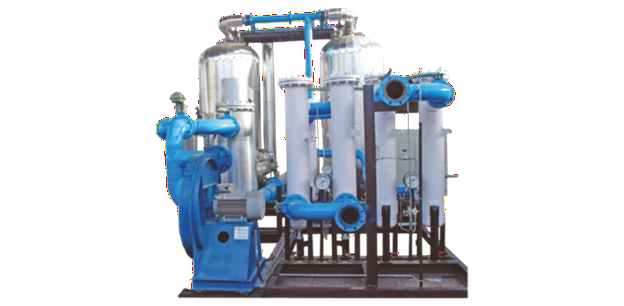

Introduction to Blower Reactivated Desiccant Air Dryers
Compressed air systems play a critical role in modern industrial operations. However, compressed air naturally contains moisture, which can negatively impact equipment performance and product quality. Removing this moisture is essential for maintaining efficiency, reliability, and system longevity in industrial environments. This is where advanced drying technologies become important.
A blower reactivated desiccant air dryer is designed to remove moisture from compressed air using adsorption technology. It ensures that air delivered to downstream systems remains dry and clean. This type of dryer is especially suitable for applications requiring continuous operation and stable dew point performance. It is widely used in industries where air purity is a critical requirement.
Blower reactivated desiccant air dryer systems are designed to reduce energy consumption while maintaining high drying efficiency. They are engineered to deliver consistent performance even under demanding industrial conditions. Their design focuses on improving operational stability and reducing compressed air losses.
What is a Blower Reactivated Desiccant Air Dryer?
A blower reactivated desiccant air dryer is an industrial air treatment system that uses heated ambient air to regenerate desiccant material. The system works in cycles where one tower dries the air while the other regenerates. This ensures uninterrupted dry air supply for continuous industrial processes.
The main difference between blower reactivated systems and conventional dryers is the method used for desiccant regeneration. Instead of using compressed air for regeneration, these systems use a blower to circulate heated air. This significantly reduces compressed air loss and improves energy efficiency.
These systems are part of advanced drying solutions designed for industries that require consistent air quality. The technology used in the CABL series ensures controlled moisture removal and stable dew point output. It is engineered for long-term performance in demanding industrial environments.
Working Principle of Blower Reactivated Desiccant Air Dryer
The working principle of a blower reactivated desiccant air dryer is based on the adsorption and regeneration cycle. During the adsorption phase, compressed air flows through a desiccant bed where moisture is removed. The dry air is then delivered to the application system.
In the regeneration phase, a blower supplies ambient air that is heated using an external heater. This heated air passes through the saturated desiccant bed, removing the trapped moisture. After regeneration, the desiccant bed is cooled and prepared for the next cycle.
Key process stages include:
- Adsorption phase for moisture removal
- Regeneration phase using heated blower air
- Cooling phase before switching cycles
- Continuous alternating tower operation
The system includes multiple components that ensure stable operation. These include blower units, heating elements, desiccant towers, switching valves, and control systems. Each component plays a critical role in maintaining system efficiency and air quality consistency.
Comparison with Other Industrial Air Drying Technologies
Industrial air drying systems come in different types, and each has specific advantages depending on application requirements. Blower reactivated dryers are often compared with heatless and heat of compression systems due to their operational differences.
Heatless desiccant dryers use a portion of compressed air for regeneration, which increases air loss and energy consumption. In contrast, blower reactivated systems eliminate this dependency and reduce overall operating costs. This makes them more suitable for large-scale continuous operations.
Refrigeration air dryer for factories systems work on a different principle by cooling compressed air to condense moisture. While they are energy efficient for certain applications, they may not achieve very low dew points required in specialized industries.
Blower reactivated dryers provide deeper drying levels compared to standard cooling-based systems. They are designed for applications where extremely low moisture content is required. This makes them a preferred choice in high-performance industrial environments.
Standard Pressure Desiccant Dryer Comparison
A standard pressure desiccant dryer is commonly used in applications where moderate air drying is sufficient. These systems typically operate using heatless or basic adsorption methods. They are suitable for smaller or less demanding compressed air systems.
However, when compared to blower reactivated systems, standard dryers may have higher compressed air consumption. This can increase operational costs in continuous production environments. Blower reactivated systems reduce this limitation by using external air for regeneration.
Both systems use desiccant materials for moisture adsorption, but the regeneration process differs significantly. This difference impacts energy efficiency, operating cost, and system scalability. Selecting the right system depends on air demand, dew point requirements, and operational continuity.
Key Benefits of Blower Reactivated Desiccant Air Dryers
Blower reactivated desiccant air dryers provide several advantages in industrial applications. Their design focuses on energy optimization and consistent performance. These benefits make them suitable for demanding compressed air systems.
Key benefits include:
- Reduced compressed air loss during regeneration
- Improved energy efficiency compared to heatless dryers
- Stable and consistent dew point output
- Suitable for continuous industrial operations
- Lower long-term operational cost
- Enhanced system reliability under heavy load conditions
These systems are also designed for scalability, allowing them to handle varying air capacities. Their performance stability ensures that downstream equipment receives clean and dry air at all times. This reduces the risk of equipment damage and production interruptions.
Industrial Applications of Blower Reactivated Desiccant Air Dryers
Blower reactivated desiccant air dryers are widely used across multiple industrial sectors. Their ability to deliver dry air consistently makes them suitable for critical applications. Industries that rely heavily on compressed air systems benefit significantly from this technology.
Common application areas include:
- Manufacturing and production facilities
- Power generation systems
- Chemical processing plants
- Electronics and precision engineering
- Pharmaceutical and controlled environments
- Heavy industrial automation systems
These dryers are particularly important in environments where moisture contamination can affect system performance. They ensure stable air quality across all operational stages. This makes them a key component in modern industrial infrastructure.
When to Choose a Blower Reactivated Air Dryer
Selecting the right air dryer depends on system requirements and operational conditions. Blower reactivated systems are ideal for industries with continuous air demand. They are also suitable for applications requiring strict moisture control.
These systems are preferred when energy efficiency is a priority in long-term operations. They are also used when compressed air quality must remain consistent without interruptions. Their design supports heavy-duty industrial environments with stable performance requirements.
The choice of air dryer should always consider dew point needs, air flow capacity, and operational cost efficiency. Blower reactivated systems provide a balanced solution for performance and energy optimization.
Maintenance and Operational Considerations
Proper maintenance ensures long-term efficiency of blower reactivated desiccant air dryers. Regular inspection of system components helps maintain consistent performance. Desiccant material condition must also be monitored for effective moisture removal.
Control systems should be checked periodically to ensure proper switching between adsorption and regeneration cycles. Blower and heater units must be maintained to avoid efficiency loss. Proper system calibration supports energy optimization and stable operation.
Routine maintenance practices help extend system lifespan and reduce operational disruptions. This ensures continuous air quality consistency across industrial processes.
Conclusion
Blower reactivated desiccant air dryers are advanced industrial systems designed for efficient moisture removal from compressed air. They offer improved energy efficiency, stable performance, and reduced operational costs compared to conventional systems. Their ability to deliver consistent dry air makes them suitable for demanding industrial environments.
These systems are widely used across multiple industries where air quality is critical. Their design ensures continuous operation with minimal energy loss. Selecting the right air drying technology depends on system requirements, and blower reactivated systems provide a strong balance of performance and efficiency.
For more details or technical assistance, you can contact Delair India Pvt Ltd.
FAQs
1. What is a blower reactivated desiccant air dryer used for?
It is used to remove moisture from compressed air in industrial systems to ensure clean and dry air supply.
2. How does a blower reactivated dryer work?
It works by using adsorption for moisture removal and heated blower air for desiccant regeneration.
3. What makes blower reactivated dryers energy efficient?
They reduce compressed air loss by using a blower instead of compressed air for regeneration.
4. Where are blower reactivated dryers commonly used?
They are used in manufacturing, power plants, pharmaceuticals, electronics, and other industrial sectors.
5. How is it different from a refrigeration air dryer?
Refrigeration dryers cool air to remove moisture, while blower reactivated dryers use adsorption for deeper drying levels.